Cardiovascular Health Risks of Smoking
Smoking has detrimental effects on cardiovascular health, increasing the risk of various heart-related conditions.
Increased Risk of Heart Disease
- Smokers are at a significantly higher risk of developing heart disease compared to non-smokers.
- According to the Centers for Disease Control and Prevention (CDC), smoking is a major cause of coronary heart disease, which can lead to heart attacks.
- Individuals who smoke are two to four times more likely to develop heart disease than non-smokers.
Impact on Blood Pressure and Cholesterol Levels
- Smoking can elevate blood pressure, putting additional strain on the heart and blood vessels.
- High blood pressure is a leading risk factor for heart disease and stroke.
- Cigarette smoke can also lead to an increase in LDL (bad) cholesterol and a decrease in HDL (good) cholesterol levels, contributing to the development of atherosclerosis.
Healthy Habits: Cardiovascular Health Risks Of Smoking
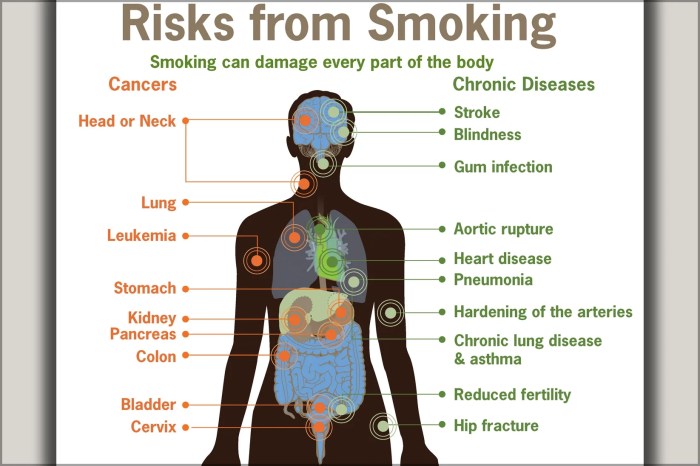
Maintaining healthy habits is crucial in reducing cardiovascular risks and promoting overall heart health. This includes a combination of regular exercise and a balanced diet to keep your heart strong and functioning optimally.
Regular Exercise
Regular physical activity plays a key role in maintaining heart health. Engaging in activities such as brisk walking, running, swimming, or cycling helps strengthen the heart muscle, improve circulation, and lower blood pressure. Aim for at least 150 minutes of moderate-intensity exercise per week to reap the cardiovascular benefits. Remember, even small changes like taking the stairs instead of the elevator or going for a short walk during breaks can make a big difference in your heart health.
Balanced Diet
A balanced diet is essential for preventing heart disease and reducing cardiovascular risks. Focus on incorporating a variety of fruits, vegetables, whole grains, lean proteins, and healthy fats into your meals. Limit your intake of saturated fats, trans fats, cholesterol, and sodium, as these can contribute to heart problems. Opt for foods rich in fiber, antioxidants, and omega-3 fatty acids to support heart health. Remember to stay hydrated by drinking plenty of water throughout the day to help maintain a healthy cardiovascular system.
Emotional Wellbeing
Cardiovascular health risks of smoking – Emotional wellbeing plays a crucial role in maintaining heart health. Stress, anxiety, and negative emotions can have a significant impact on cardiovascular wellness, making it essential to address emotional factors for overall well-being.
Strategies for Managing Stress
Stress management is key to improving cardiovascular health. Here are some effective strategies to help reduce stress levels:
- Avoiding stressful triggers and situations whenever possible.
- Practicing relaxation techniques such as deep breathing, meditation, or yoga.
- Engaging in regular physical activity to release endorphins and reduce stress.
- Maintaining a healthy work-life balance to prevent burnout and chronic stress.
- Seeking support from friends, family, or a therapist to talk about feelings and emotions.
Positive Emotions and Heart Health
Cultivating positive emotions can have a profound impact on heart health. Studies have shown that emotions like joy, gratitude, and love can benefit cardiovascular wellness in the following ways:
- Lowering blood pressure and reducing the risk of heart disease.
- Boosting the immune system and promoting overall well-being.
- Improving heart rate variability, a key indicator of heart health.
- Enhancing social connections and support networks, which are crucial for heart health.
Healthy Aging
Smoking not only impacts cardiovascular health in the present but also accelerates the aging process of the cardiovascular system, leading to long-term consequences.
Effects of Smoking on Aging
- Smoking causes damage to blood vessels, making them less elastic and more prone to plaque build-up, which accelerates the aging of the cardiovascular system.
- It increases the risk of developing conditions such as atherosclerosis, which can further strain the heart and lead to premature aging of the cardiovascular system.
- Smoking also contributes to oxidative stress and inflammation in the body, accelerating cellular aging processes that affect the heart and blood vessels.
Tips for Healthy Aging Despite Smoking, Cardiovascular health risks of smoking
- Avoid smoking and seek support to quit if you are a smoker. Quitting smoking can slow down the aging process of the cardiovascular system and reduce the risk of heart disease.
- Adopt a healthy lifestyle with regular exercise, balanced diet, and stress management techniques to support overall cardiovascular health and counteract the effects of smoking.
- Stay hydrated, get enough sleep, and prioritize self-care to maintain optimal heart function and reduce the impact of smoking on the aging process.
Importance of Regular Health Check-ups
Regular health check-ups are crucial as you age to monitor cardiovascular health, detect any early signs of heart disease, and take preventive measures. These check-ups can help in assessing the impact of smoking on your heart health and guide you towards making necessary lifestyle changes for healthy aging.
Active Lifestyle
Regular physical activity plays a crucial role in reducing cardiovascular risks and promoting overall heart health. Engaging in an active lifestyle helps strengthen the heart, improve circulation, and maintain healthy blood pressure levels.
Benefits of an Active Lifestyle
- Improved cardiovascular health: Regular exercise can lower the risk of heart disease, stroke, and other cardiovascular conditions.
- Weight management: Physical activity helps maintain a healthy weight, reducing the strain on the heart.
- Stress reduction: Exercise releases endorphins, which can help alleviate stress and improve emotional well-being.
- Increased energy levels: Being active can boost energy levels and overall vitality.
Physical Activities for Heart Health
- Cardiovascular exercises: Running, cycling, swimming, and aerobics are great for strengthening the heart and improving endurance.
- Strength training: Weightlifting and resistance exercises help build muscle mass, which can improve overall cardiovascular health.
- Yoga and Pilates: These practices focus on flexibility, balance, and relaxation, contributing to heart health indirectly through stress reduction.
- Daily activities: Simple activities like walking, gardening, or taking the stairs instead of the elevator can also contribute to a more active lifestyle.
Relationship Between Exercise and Heart Strength
Regular exercise helps the heart become more efficient in pumping blood, leading to a stronger cardiovascular system. The heart muscle grows stronger with exercise, allowing it to pump more blood with less effort. This improved efficiency reduces the risk of heart disease and other cardiovascular issues over time.
Healthy Recipes
When it comes to reducing cardiovascular risks, nutrition plays a crucial role in maintaining overall heart health. By incorporating heart-healthy recipes into your diet, you can support a healthy cardiovascular system and improve your overall well-being.
Impact of Nutrition on Heart Health
- Focus on incorporating fruits and vegetables rich in antioxidants such as berries, leafy greens, and citrus fruits to reduce inflammation and oxidative stress in the body.
- Choose whole grains like quinoa, brown rice, and oats over refined grains to support heart health and regulate cholesterol levels.
- Include sources of lean protein such as fish, poultry, tofu, and legumes to reduce saturated fat intake and promote heart health.
- Opt for healthy fats like avocados, nuts, seeds, and olive oil to improve cholesterol levels and reduce the risk of heart disease.
Heart-Healthy Meal Ideas
- Grilled salmon with quinoa and roasted vegetables
- Vegetable stir-fry with tofu and brown rice
- Spinach and strawberry salad with walnuts and balsamic vinaigrette
- Oatmeal topped with fresh berries, almonds, and a drizzle of honey
Mental Resilience
Mental resilience plays a crucial role in positively impacting cardiovascular health. The ability to bounce back from challenges, stress, and setbacks can significantly reduce the harmful effects of smoking on the heart.
Techniques for Building Mental Strength
- Practice positive self-talk to counter negative thoughts and emotions.
- Engage in regular physical exercise to release endorphins and boost mood.
- Utilize relaxation techniques such as deep breathing, meditation, or yoga to reduce stress levels.
- Seek support from friends, family, or a therapist to navigate difficult emotions and situations.
Examples of Mindfulness Practices
- Mindful breathing exercises to promote relaxation and reduce anxiety.
- Body scan meditation to increase awareness of physical sensations and promote overall well-being.
- Gratitude journaling to cultivate a positive mindset and focus on the good in life.
- Visualization techniques to imagine a healthy heart and encourage positive health outcomes.
Immune Support
Smoking can weaken the immune system, making individuals more vulnerable to various health issues, including cardiovascular problems. Maintaining a healthy immune system is crucial for protecting the heart and overall wellness.
Boosting the Immune System
There are several ways to boost the immune system to support heart health:
- Avoid smoking and exposure to secondhand smoke, as it can compromise the immune system.
- Eat a balanced diet rich in fruits, vegetables, whole grains, and lean proteins to provide essential nutrients for immune function.
- Stay physically active to enhance immune response and reduce the risk of heart disease.
- Get an adequate amount of sleep to support immune function and overall health.
Maintaining a Healthy Immune System
Here are some tips for maintaining a healthy immune system:
- Stay hydrated by drinking plenty of water throughout the day.
- Manage stress through relaxation techniques like deep breathing, meditation, or yoga.
- Avoid excessive alcohol consumption, as it can weaken the immune system.
- Engage in regular physical activity to boost immune function and promote heart health.
Stress Relief
When it comes to cardiovascular health, managing stress is crucial, especially for individuals who smoke. Stress can significantly impact the heart and exacerbate the negative effects of smoking on the cardiovascular system. Finding effective ways to reduce stress is essential for overall heart health and well-being.
Impact of Stress on Cardiovascular Health
Stress can lead to increased heart rate, elevated blood pressure, and the release of stress hormones, all of which can strain the heart and blood vessels. When combined with the harmful effects of smoking, the risk of heart disease and other cardiovascular issues becomes even higher. It is important for smokers to recognize the impact of stress on their heart health and take proactive steps to manage it.
- Practice deep breathing exercises: Deep breathing can help calm the mind and reduce stress levels. Take slow, deep breaths in through your nose and exhale slowly through your mouth.
- Engage in physical activity: Regular exercise is a great way to relieve stress and improve cardiovascular health. Aim for at least 30 minutes of moderate exercise most days of the week.
- Try meditation or mindfulness: These practices can help you stay present and focused, reducing anxiety and stress levels.
- Spend time in nature: Connecting with nature can have a calming effect on the mind and body. Take a walk in the park or spend time in a garden to unwind.
Importance of Stress Management in Preventing Heart Disease
Effective stress management is key to preventing heart disease and maintaining a healthy heart. By reducing stress levels, individuals can lower their risk of developing cardiovascular issues and improve their overall quality of life. It is essential for smokers to prioritize stress relief techniques as part of their heart-healthy lifestyle.
Nutritional Balance
Having a balanced diet plays a crucial role in reducing cardiovascular health risks associated with smoking. It can help counteract the negative effects of smoking on the heart and overall wellness.
Foods Supporting Heart Health
- Eat plenty of fruits and vegetables rich in antioxidants, vitamins, and minerals to protect the heart.
- Incorporate whole grains, lean proteins, and healthy fats like avocados and nuts to support heart function.
- Include sources of omega-3 fatty acids such as salmon, flaxseeds, and chia seeds for their anti-inflammatory properties.
Importance of Nutritional Balance
Maintaining a balanced diet is essential for overall cardiovascular wellness. It helps regulate blood pressure, cholesterol levels, and weight, all of which are important factors in reducing the risks of heart disease, especially in individuals who smoke.
FAQ Summary
What specific cardiovascular health risks are associated with smoking?
Smoking increases the risk of heart disease, high blood pressure, and elevated cholesterol levels, leading to potential cardiovascular complications.
Can quitting smoking reverse the cardiovascular damage already done?
Quitting smoking can significantly reduce the risk of cardiovascular issues and improve heart health over time, but it may not entirely reverse the damage already incurred.
How does smoking impact emotional well-being in relation to heart health?
Smoking can exacerbate stress and anxiety, negatively affecting emotional well-being, which in turn can impact cardiovascular health by increasing the risk of heart-related problems.