Best stress management practices for students during exam season are crucial for navigating the academic pressures and maintaining a healthy mindset. The period leading up to exams can be a whirlwind of anxiety, pressure, and sleepless nights. Students often grapple with a multitude of stressors, including academic deadlines, social commitments, and the fear of failure.
This guide provides practical strategies to help students manage stress effectively, improve their well-being, and achieve their academic goals.
By incorporating these techniques into their daily routine, students can develop a resilient approach to exam season, enhancing their academic performance and overall well-being. The journey to academic success is not just about studying hard; it’s about taking care of oneself, managing stress, and cultivating a positive mindset.
Understanding Exam Stress
Exam stress is a common experience for students, especially during exam season. It’s a natural response to the pressure of academic expectations and the fear of failure. While some stress can be motivating, excessive stress can be detrimental to both physical and mental well-being, ultimately impacting academic performance.
Causes of Exam Stress
Exam stress arises from a combination of factors, both internal and external. These factors can include:
- Academic Pressure:The pressure to perform well academically, often driven by personal expectations, parental pressure, or competitive environments, can contribute significantly to exam stress.
- Fear of Failure:The fear of not meeting expectations, disappointing oneself or others, or failing to achieve desired grades can create significant anxiety and stress.
- Time Constraints:The limited time available to prepare for exams, coupled with the need to manage other commitments like work or personal life, can lead to feelings of overwhelm and stress.
- Financial Concerns:The financial burden of tuition, books, and other expenses can add to the stress of exams, especially for students who are working or financially supporting themselves.
- Social Pressure:Peer pressure and the perception of others’ academic achievements can also contribute to exam stress.
- Lack of Preparation:Poor study habits, procrastination, and inadequate preparation can increase stress levels during exam season.
- Lack of Sleep:Cramming for exams or staying up late to study can disrupt sleep patterns, leading to exhaustion and increased stress.
Symptoms of Exam Stress
Exam stress manifests in various ways, both physically and psychologically.
Physical Symptoms
- Headaches:Exam stress can trigger tension headaches or migraines.
- Muscle Tension:Increased muscle tension, particularly in the shoulders, neck, and back, is a common symptom of stress.
- Fatigue:Exam stress can lead to feelings of exhaustion and difficulty concentrating.
- Insomnia:Difficulty falling asleep or staying asleep is a frequent symptom of exam stress.
- Changes in Appetite:Stress can affect appetite, leading to either overeating or loss of appetite.
- Gastrointestinal Issues:Stress can contribute to digestive problems like nausea, diarrhea, or constipation.
Psychological Symptoms
- Anxiety:Exam stress can trigger feelings of anxiety, worry, and nervousness.
- Irritability:Increased irritability and short temper are common responses to stress.
- Concentration Difficulties:Stress can impair focus and make it difficult to concentrate on studying or completing tasks.
- Negative Self-Talk:Stress can lead to negative thoughts and self-doubt, making it harder to believe in one’s abilities.
- Depression:In severe cases, exam stress can contribute to feelings of depression and hopelessness.
Impact of Exam Stress on Academic Performance
Exam stress can have a significant impact on academic performance.
- Reduced Concentration:Stress can impair concentration and make it difficult to retain information.
- Poor Decision-Making:Stress can lead to poor judgment and decision-making, which can negatively impact exam performance.
- Increased Errors:Stress can increase the likelihood of making careless mistakes on exams.
- Lowered Motivation:Stress can reduce motivation to study or put in the effort needed to succeed.
- Procrastination:Stress can lead to procrastination, making it harder to complete tasks on time.
Positive Mindset and Self-Care
Exam season can be a stressful time, but maintaining a positive mindset and prioritizing self-care can significantly improve your well-being and academic performance. By nurturing your mental and emotional health, you can better manage stress and approach your studies with a renewed sense of confidence.
Affirmations for Self-Confidence
Affirmations are positive statements that can help reprogram your subconscious mind and build self-belief. Regularly repeating these affirmations can help reduce negative thoughts and promote a more positive outlook.
- I am capable and confident in my abilities.
- I am prepared and ready to succeed in my exams.
- I believe in myself and my potential.
- I am calm and focused during exams.
- I am worthy of success and happiness.
Positive Self-Talk Techniques
Positive self-talk involves replacing negative thoughts with more constructive and supportive statements. This technique can help manage anxiety and boost your self-esteem.
- Challenge negative thoughts:When you experience negative thoughts, ask yourself if they are realistic or helpful. If not, try to replace them with more positive and encouraging statements. For example, instead of thinking “I’m going to fail this exam,” try “I’ve prepared well and I’m going to do my best.”
- Focus on your strengths:Remind yourself of your past successes and areas where you excel.
This can help build confidence and reduce self-doubt.
- Practice gratitude:Focusing on the positive aspects of your life can help shift your perspective and reduce stress.
Self-Compassion and Taking Breaks
Practicing self-compassion is crucial during exam season. Be kind to yourself, acknowledge your limitations, and recognize that everyone experiences stress. Taking regular breaks is also essential for maintaining focus and preventing burnout.
- Allow yourself to feel your emotions:Don’t suppress your feelings. Acknowledge and validate your stress and anxiety.
- Be understanding of yourself:Recognize that you are doing your best in a challenging situation.
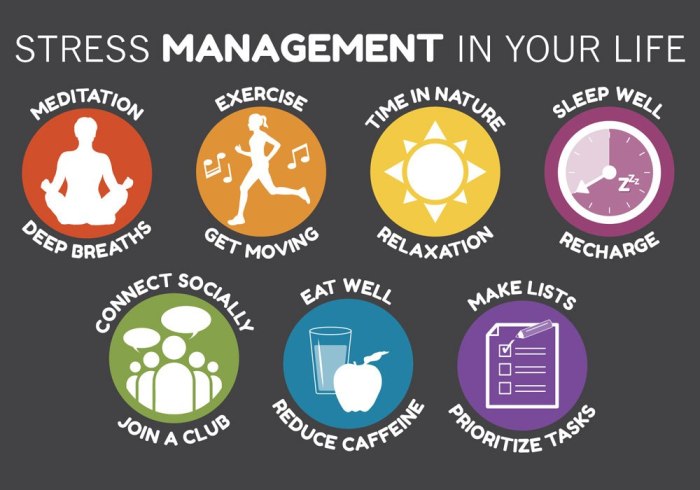
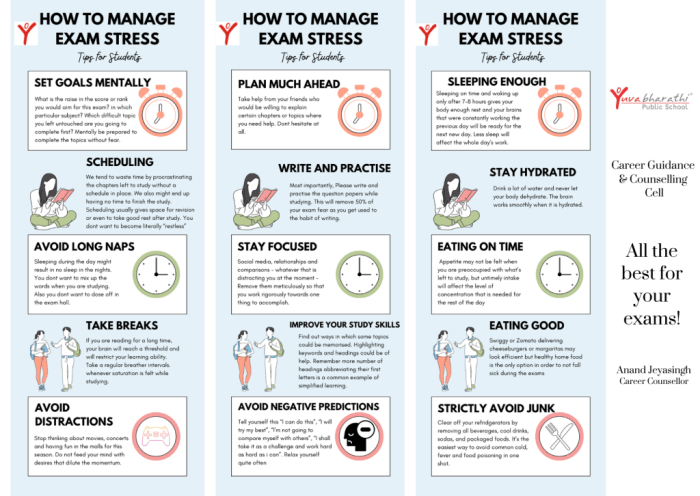
- Schedule breaks:Take regular breaks from studying to engage in activities you enjoy. This could include exercise, spending time in nature, listening to music, or simply relaxing.
- Get enough sleep:Aim for 7-8 hours of sleep per night. Adequate sleep is crucial for cognitive function, memory, and emotional well-being.
Managing Exam Day Anxiety: Best Stress Management Practices For Students During Exam Season
The day of the exam can be a whirlwind of emotions. While weeks of preparation have led up to this moment, anxiety can still take hold. To navigate this, it’s crucial to have a plan for both the night before and the day of the exam.
Preparing the Night Before
The night before an exam is a crucial time to set yourself up for success. A well-structured routine can help calm nerves and ensure you’re ready to perform at your best.
- Review Key Concepts:Instead of cramming new information, focus on revisiting key concepts and formulas. A quick review can boost confidence and refresh your memory.
- Pack Your Essentials:Gather everything you’ll need for the exam, including pens, pencils, calculator, ID, and any other required materials. Having everything ready eliminates last-minute stress.
- Get a Good Night’s Sleep:Aim for 7-8 hours of quality sleep. A well-rested mind is more alert and focused during the exam.
- Relax and Unwind:Engage in activities that help you relax, such as reading, listening to music, or taking a warm bath. Avoid studying right before bed, as this can keep your mind active and make it harder to fall asleep.
Calming Nerves on Exam Day
Exam day anxiety is common, but there are effective techniques to manage it:
- Deep Breathing Exercises:Practice deep, slow breaths to calm your nervous system. Inhale deeply through your nose, hold for a few seconds, and exhale slowly through your mouth. Repeat this several times.
- Positive Self-Talk:Replace negative thoughts with positive affirmations. Remind yourself of your preparation and abilities. Focus on what you know, not what you don’t.
- Visualization:Imagine yourself successfully navigating the exam. Visualize yourself feeling confident and focused, answering questions accurately.
- Progressive Muscle Relaxation:Tense and release different muscle groups in your body, starting from your toes and working your way up. This can help reduce physical tension associated with anxiety.
Managing Test-Taking Stress, Best stress management practices for students during exam season
Maintaining focus and managing stress during the exam is key:
- Read Instructions Carefully:Pay close attention to the instructions and any specific requirements for each question. Misunderstanding instructions can lead to unnecessary stress and errors.
- Pace Yourself:Allocate time wisely for each section of the exam. Don’t spend too much time on any one question, and move on if you get stuck. You can always come back to it later.
- Take Breaks:If you feel overwhelmed, take short breaks to clear your head. Step away from the exam for a few minutes, stretch, and take some deep breaths.
- Focus on the Present:Don’t dwell on past mistakes or worry about future questions. Stay present and focus on the question at hand.
Final Conclusion
Exam season can be a challenging time for students, but by adopting effective stress management practices, they can navigate the pressures and achieve their academic goals. Remember, self-care is not a luxury but a necessity for success. Prioritizing well-being, managing stress effectively, and seeking support when needed will empower students to thrive during this demanding period.
By incorporating these practices into their lives, students can approach exams with confidence and resilience, ultimately achieving their full potential.
Query Resolution
What are some common signs of exam stress?
Common signs include difficulty concentrating, changes in sleep patterns, increased anxiety, irritability, and physical symptoms like headaches or stomach aches.
How can I manage my time effectively during exam season?
Create a realistic study schedule, prioritize tasks, break down large assignments into smaller chunks, and avoid procrastination. Also, allocate specific time slots for breaks and relaxation.
Is it okay to seek professional help for exam stress?
Absolutely! Seeking support from a therapist or counselor can provide valuable coping mechanisms and strategies for managing stress and anxiety.
What are some healthy ways to cope with exam anxiety?
Engage in relaxation techniques like deep breathing exercises, mindfulness meditation, or progressive muscle relaxation. Also, prioritize sleep, eat nutritious meals, and engage in enjoyable activities to de-stress.