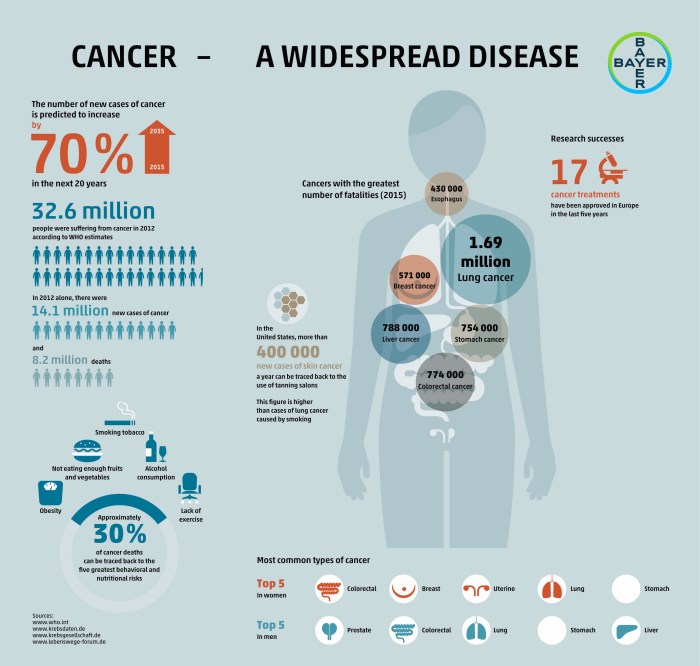
Early cancer detection is a vital step in improving treatment outcomes and survival rates. “Best health screenings for detecting cancer at an early stage” are crucial for identifying potential issues before they become more severe, giving patients the best chance at a successful recovery.
This article delves into the most important cancer screenings, outlining their benefits, limitations, and recommendations for different age groups and risk factors.
Understanding the significance of early detection is essential for making informed decisions about your health. By taking a proactive approach and engaging in regular screenings, you can significantly increase your chances of detecting cancer at an early, more treatable stage.
The Importance of Early Cancer Detection
Early cancer detection is crucial for improving treatment outcomes and increasing survival rates. When cancer is detected early, it is often smaller, less aggressive, and has not spread to other parts of the body. This makes treatment more effective and less invasive, leading to better chances of a full recovery.
Impact of Early Detection on Survival Rates
Early detection significantly impacts cancer survival rates. Numerous studies have demonstrated the positive correlation between early diagnosis and improved outcomes. For instance, the American Cancer Society reports that the five-year survival rate for breast cancer is 99% when diagnosed at the localized stage, compared to 27% when diagnosed at the distant stage.
Similarly, the five-year survival rate for colorectal cancer is 90% when diagnosed at the localized stage, compared to 14% when diagnosed at the distant stage. These statistics underscore the critical role of early detection in improving cancer survival rates.
Challenges Associated with Late-Stage Cancer Diagnosis
Late-stage cancer diagnosis poses significant challenges for treatment and prognosis. When cancer is detected at a later stage, it is often more difficult to treat effectively. The cancer may have spread to other parts of the body, making it more resistant to treatment.
Furthermore, treatment options for late-stage cancer are often more invasive and aggressive, leading to more severe side effects and a lower quality of life.
Common Cancers and Recommended Screenings
Early detection of cancer is crucial for increasing survival rates and improving treatment outcomes. Regular screenings are essential for identifying cancer at an early stage when it is most treatable. This section will delve into common cancers and their associated screenings, providing insights into recommended tests, effectiveness, and frequency guidelines.
Cancer Screenings: An Overview, Best health screenings for detecting cancer at an early stage
Cancer screenings are preventive medical tests that aim to detect cancer at an early stage when it may not cause symptoms. These tests can include imaging scans, blood tests, or physical examinations.
Common Cancers and Recommended Screenings
The following table provides a summary of common cancers, their associated risk factors, and recommended screening tests.
| Cancer | Risk Factors | Recommended Screenings |
|---|---|---|
| Breast Cancer | Family history, genetic mutations (BRCA1 and BRCA2), age, race/ethnicity, dense breast tissue, early menarche, late menopause, nulliparity, hormone replacement therapy, alcohol consumption, smoking, obesity, lack of physical activity | Mammograms, breast ultrasound, breast MRI (for high-risk individuals) |
| Cervical Cancer | Human papillomavirus (HPV) infection, smoking, weakened immune system, early age at first intercourse, multiple sexual partners, long-term use of oral contraceptives | Pap test, HPV test |
| Colorectal Cancer | Family history, personal history of polyps, age, race/ethnicity, smoking, obesity, physical inactivity, diet low in fruits and vegetables, heavy alcohol consumption, inflammatory bowel disease | Colonoscopy, fecal occult blood test (FOBT), sigmoidoscopy |
| Prostate Cancer | Age, family history, race/ethnicity, diet high in red meat and dairy products, obesity, smoking | Prostate-specific antigen (PSA) test, digital rectal exam (DRE) |
| Lung Cancer | Smoking, exposure to radon, asbestos, and other carcinogens, family history, air pollution, genetic mutations | Low-dose computed tomography (LDCT) scan |
Screening Frequency and Guidelines
The frequency of cancer screenings varies based on age, family history, and other risk factors. It is essential to consult with your healthcare provider to determine the most appropriate screening schedule for your individual needs.
Breast Cancer
Women aged 40-44
Mammogram every 1-2 years
Women aged 45-54
Mammogram annually
Women aged 55 and older
Mammogram every 1-2 years or as recommended by your doctor
Women with a strong family history of breast cancer
Mammograms and/or other screenings may be recommended at an earlier age or more frequently
Cervical Cancer
Women aged 21-29
Pap test every 3 years
Women aged 30-65
Pap test and HPV test every 5 years or Pap test alone every 3 years
Women over 65
No further screening if prior screenings have been normal and the woman is not at high risk
Women who have had a hysterectomy
No further screening is necessary unless the hysterectomy was performed for cervical cancer or precancerous lesions
Colorectal Cancer
Individuals aged 45-75
Colonoscopy every 10 years
Individuals at increased risk
Colonoscopy may be recommended at an earlier age or more frequently
Individuals aged 76-85
Colonoscopy every 10 years, but individualized risk assessment is recommended
Individuals over 85
Colonoscopy is generally not recommended unless there is a specific indication
Prostate Cancer
Men aged 55-69
PSA test and DRE every 1-2 years, individualized risk assessment is recommended
Men over 70
PSA test and DRE may be considered if there are specific risk factors
Men with a strong family history of prostate cancer
PSA test and DRE may be recommended at an earlier age or more frequently
Lung Cancer
Individuals aged 55-80 who have a 30 pack-year smoking history
LDCT scan annually
Individuals who have quit smoking within the past 15 years
LDCT scan annually
Individuals who have never smoked
LDCT scan is not generally recommended
Breast Cancer Screenings: Best Health Screenings For Detecting Cancer At An Early Stage
Breast cancer is one of the most common cancers among women, and early detection is crucial for improving treatment outcomes. Mammograms are the most widely used screening tool for breast cancer, but other methods, such as breast ultrasound and MRI, can also play a role.
Mammograms
Mammograms are X-ray images of the breast that can detect abnormalities, such as tumors, before they are felt. Mammograms are typically recommended for women starting at age 40 or 45, but earlier screening may be recommended for women with a family history of breast cancer or other risk factors.
- Benefits:Mammograms can detect breast cancer at an early stage, when it is most treatable. Early detection can increase the chances of survival and reduce the need for aggressive treatments.
- Limitations:Mammograms are not perfect, and they can sometimes miss cancers or produce false-positive results. Dense breast tissue can make it harder to detect tumors on mammograms. Also, mammograms can be uncomfortable for some women.
Breast Ultrasound
Breast ultrasound uses sound waves to create images of the breast. It is often used to investigate suspicious areas found on a mammogram or to evaluate breast lumps.
- Benefits:Ultrasound is a painless and non-invasive procedure. It can help to differentiate between solid and fluid-filled breast masses, which can be helpful in determining whether a lump is cancerous.
- Limitations:Ultrasound is not as effective as mammograms in detecting small cancers. It can also be difficult to distinguish between benign and malignant tumors, especially in women with dense breasts.
Breast MRI
Breast MRI uses a magnetic field and radio waves to create detailed images of the breast. It is often used to screen women with a high risk of breast cancer, such as those with a strong family history or a genetic mutation.
- Benefits:Breast MRI is very sensitive and can detect small cancers that may be missed by mammograms or ultrasound. It can also help to identify multiple tumors and evaluate the extent of the cancer.
- Limitations:Breast MRI is more expensive and time-consuming than other screening methods. It can also produce false-positive results, leading to unnecessary biopsies.
Colorectal Cancer Screenings
Colorectal cancer is the third most common cancer diagnosed in both men and women in the United States. Early detection is crucial for successful treatment and improved outcomes. There are several screening methods available to detect colorectal cancer at an early stage.
Colonoscopy
A colonoscopy is the gold standard for colorectal cancer screening. During a colonoscopy, a doctor inserts a thin, flexible tube with a camera attached into the rectum and colon. This allows the doctor to visualize the entire colon and rectum, enabling them to detect any abnormalities or polyps.
Polyps are growths in the colon that can become cancerous if left untreated. Removing polyps during a colonoscopy can significantly reduce the risk of developing colorectal cancer.
Alternative Screening Methods
While colonoscopy is considered the most effective screening method, there are alternative options available for individuals who may not be able to undergo a colonoscopy.
Fecal Occult Blood Testing (FOBT)
FOBT involves testing a stool sample for the presence of blood that is not visible to the naked eye. This type of blood can be a sign of colorectal cancer or other gastrointestinal problems. FOBT is less invasive than a colonoscopy but may not detect all precancerous polyps.
Stool DNA Testing
Stool DNA testing analyzes a stool sample for the presence of abnormal DNA, which can indicate the presence of colorectal cancer or polyps. This test is more sensitive than FOBT and can detect a wider range of abnormalities. However, it is not as accurate as a colonoscopy and may require follow-up testing.
Risks and Benefits of Screening Methods
Each screening method has its own set of risks and benefits.
Colonoscopy
Benefits
- Highly accurate in detecting colorectal cancer and polyps.
- Allows for the removal of polyps during the procedure.
- Can help prevent colorectal cancer.
Risks
- Potential for complications, such as bleeding or perforation of the colon.
- Requires sedation, which may have side effects.
- Can be uncomfortable for some individuals.
Fecal Occult Blood Testing (FOBT)
Benefits
Risks
Stool DNA Testing
Benefits
Risks
Outcome Summary
Early cancer detection is a crucial aspect of preventative healthcare. By understanding the recommended screenings for your age and risk factors, you can empower yourself to take control of your health and potentially catch cancer in its earliest stages.
Remember, regular screenings, combined with a healthy lifestyle, can make a significant difference in your overall well-being and chances of successful cancer treatment.
FAQ Section
What are the most common cancers?
The most common cancers vary depending on factors like age, gender, and ethnicity. However, some of the most prevalent cancers include breast cancer, lung cancer, colorectal cancer, prostate cancer, and skin cancer.
How often should I get screened for cancer?
Screening frequency varies based on age, family history, and individual risk factors. It’s crucial to consult with your healthcare provider to determine the appropriate screening schedule for you.
What are the risks associated with cancer screenings?
Most cancer screenings have minimal risks, but some procedures, like colonoscopies, may carry slight risks. Discuss any concerns with your healthcare provider to weigh the benefits and risks.
Can I do anything to reduce my risk of developing cancer?
Yes, adopting a healthy lifestyle can significantly reduce your cancer risk. This includes maintaining a balanced diet, exercising regularly, avoiding smoking, and limiting alcohol consumption.